5/7 🪩🪩🪩🪩🪩
Wild Horse Nine is fascinating. John Malkovich delivers what I consider one of the three best performances of his career, and possibly his finest work in years. There’s something extraordinary about the way he balances subtlety with sharpness, delivering a performance that feels both restrained and incredibly powerful. Every expression, every pause, and every carefully delivered line adds another layer to his character. Watching him command the big screen is a reminder of just how remarkable an actor he is. He draws you into his character’s world so effortlessly that the entire experience becomes deeply satisfying.
Storyline
At its core, Wild Horse Nine is a dark comedy with elements of espionage, political intrigue, and drama. But make no mistake, this is a comedy first, and a surprisingly thoughtful one at that.
The film follows two CIA agents, played by John Malkovich and Sam Rockwell, who embark on a journey that gradually becomes something much more personal, particularly as Malkovich’s character reflects on his life and the relationships that have shaped it.
Without spoiling anything, this isn’t really a traditional spy film. It’s a story about friendship, mortality, loyalty, and the responsibilities we carry for the people closest to us. What do we owe our friends? How much of our past defines who we are today? And when we look back on our lives, what ultimately matters most?
I found these questions fascinating, especially as the film explores them through its unusual blend of humor and emotional introspection.
The screenplay also touches on some compelling political and historical themes, weaving fictionalized encounters and conspiracy theories into a narrative that feels surprisingly relevant to modern culture. Considering how much political distrust and speculation have shaped the world around us, I appreciated how the film used these ideas to explore the consequences of power, secrecy, and personal responsibility.
My biggest criticism is that the movie feels a little too long. There are moments when the pacing could have been tighter, and I think trimming a few scenes would have strengthened the overall experience. However, the ending is incredibly satisfying. The story builds toward an emotional crescendo that makes the journey feel worthwhile and leaves you with plenty to think about.
Acting
John Malkovich is absolutely the standout here. It’s not often that I watch a performance and immediately start thinking about where it ranks within an actor’s entire career, but that’s exactly what happened.
His ability to communicate so much with so little is remarkable. There’s an emotional complexity beneath the humor, and he navigates that balance beautifully. It’s a performance that could easily have felt exaggerated in another actor’s hands, but Malkovich makes everything feel natural and deliberate.
Sam Rockwell is equally compelling as his counterpart, and their chemistry is essential to making the film work. Their interactions give the story its emotional foundation, allowing the comedy and the more serious moments to coexist without undermining each other.
The supporting cast also deserves recognition. Everyone brings something meaningful to the ensemble, and I thought the performances collectively elevated the material. It’s one of the strongest ensemble casts I’ve seen in the past few months, with each actor helping bring Martin McDonagh’s distinctive dialogue and characters to life.
Visuals / Cinematography
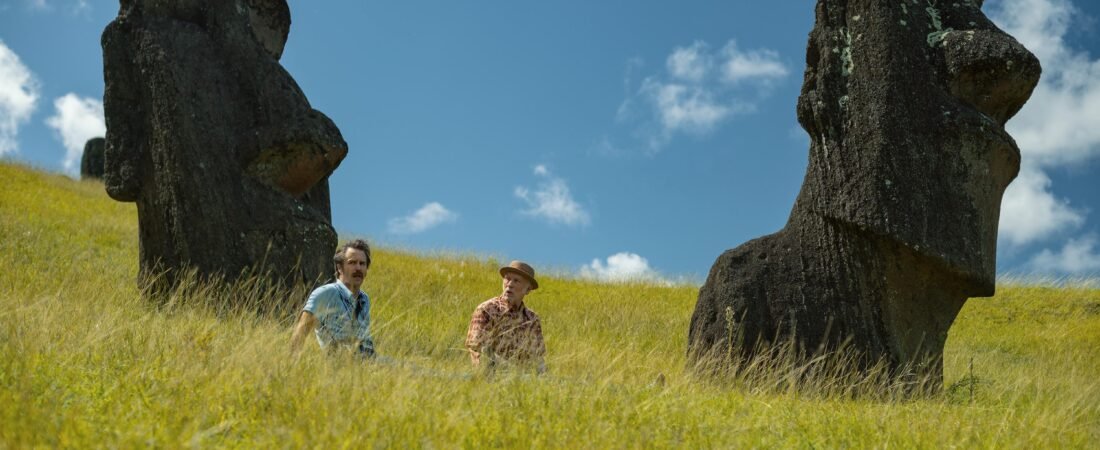
The cinematography is top-notch. There were several frames that genuinely inspired me, the kind of compositions I hope to remember and draw from when creating something of my own in the future.
The film has a wonderful visual texture, with beautiful compositions, thoughtful framing, and an atmosphere that complements its unusual storytelling. There’s a richness to the imagery that makes the world feel tangible, while the contrast between the environment and the characters adds another dimension to the experience.
I also appreciated the production design and costumes. Everything feels carefully considered without drawing unnecessary attention to itself. The various visual elements blend seamlessly, creating a cohesive aesthetic that allows the performances and story to remain at the forefront.
It’s the type of cinematography that reminds me how much visual storytelling can communicate without a single word of dialogue.
Music / Sound
Interestingly, the music wasn’t particularly memorable to me, but I also never found it distracting or out of place.
Sometimes a score doesn’t need to announce itself to be effective. In this case, the music complements the atmosphere and emotional beats without overpowering the performances. While I don’t think I’ll be revisiting the soundtrack on its own, I appreciated how naturally it fit into the film’s overall experience.
Final Thoughts
Wild Horse Nine is one of those films that surprises you with how much it has to say beneath its comedic surface.
What initially appears to be an unconventional adventure involving two CIA agents gradually reveals itself as something far more introspective. It’s about the friendships we maintain, the choices we make, the secrets we carry, and the complicated relationship between our personal lives and the larger world around us.
Martin McDonagh has crafted a film that manages to be funny, politically intriguing, visually striking, and emotionally resonant, sometimes all within the same scene.
Yes, I think it could have been a little shorter, and not every element is equally memorable. But the performances, particularly Malkovich’s, are exceptional, and the ending delivers the kind of satisfaction that makes me appreciate the journey even more.
It’s a fascinating, beautifully performed film that proves an unconventional comedy can still have a tremendous amount of heart. Definitely worth seeing on the big screen.
Emotion: 5/7
Editing & Story: 5/7
Visuals: 7/7
Editorial Disclaimer: This review represents independent editorial opinions. All film titles, character names, images, and related intellectual property remain the property of their respective studios, distributors, creators, and rights holders. Any referenced promotional materials are used for editorial and commentary purposes.